Project
Rhythm Checker
Your phone hears every hit and tells you, in milliseconds, whether you rushed or dragged. Its tuner checks each drum.
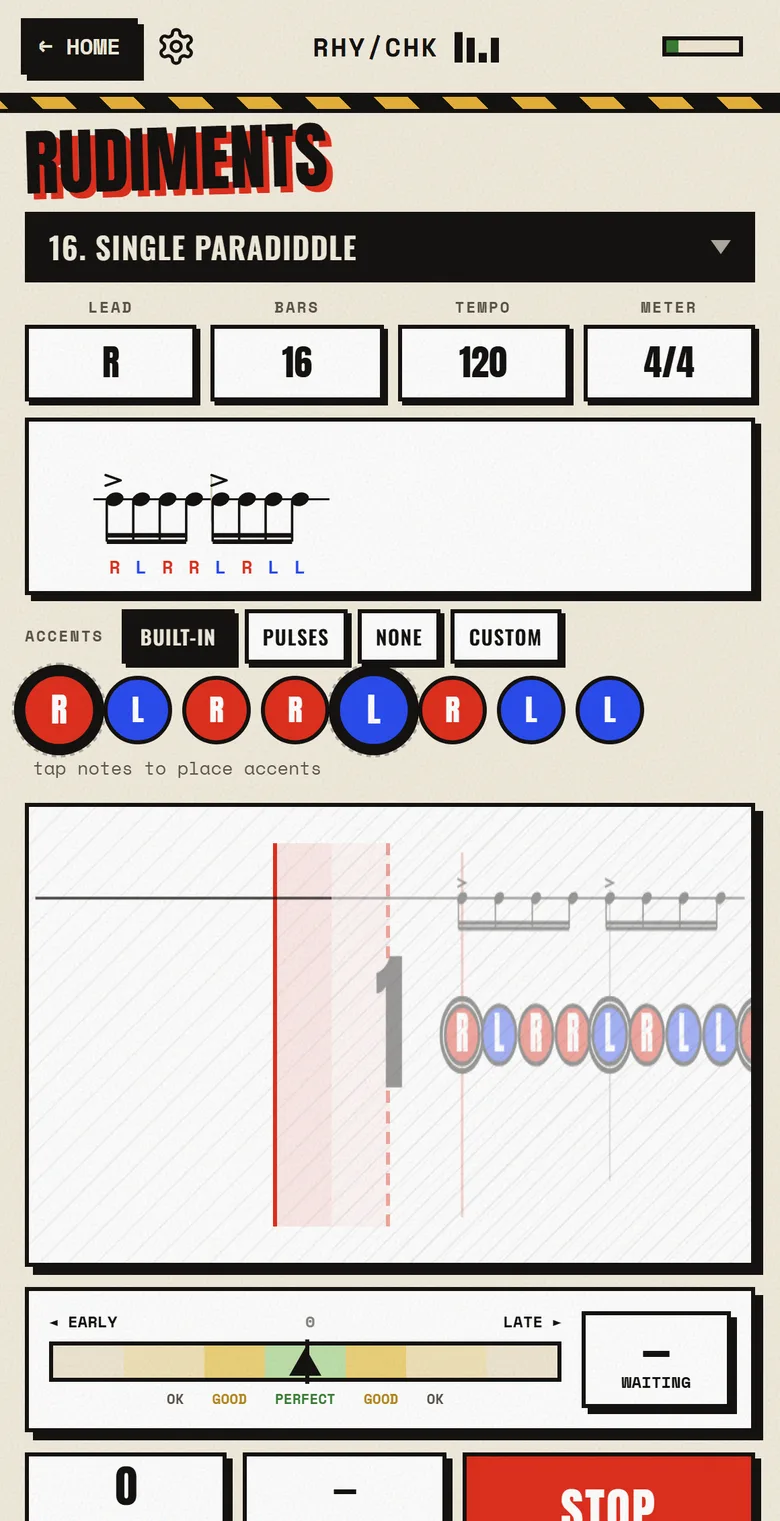
40drum rudiments to drill
1 msto the millisecond, on every hit
84tests with planted timing errors
$0cloud cost to run it
In motion
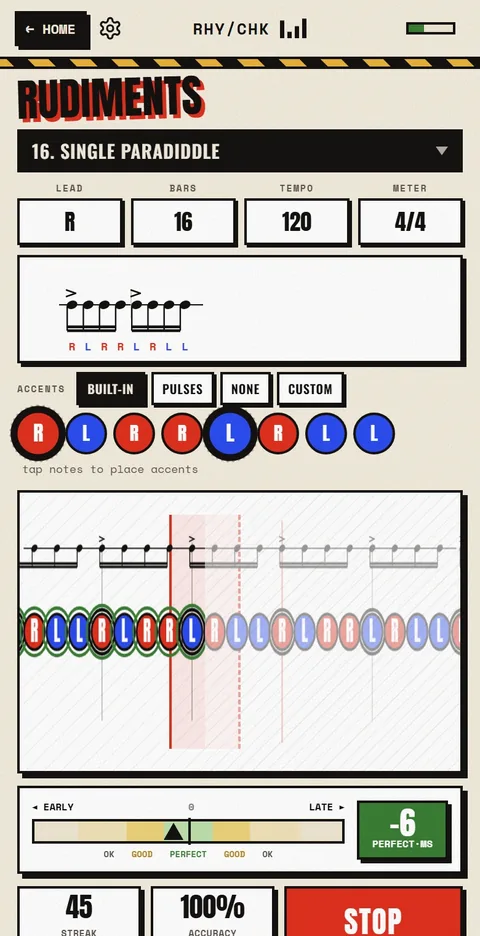
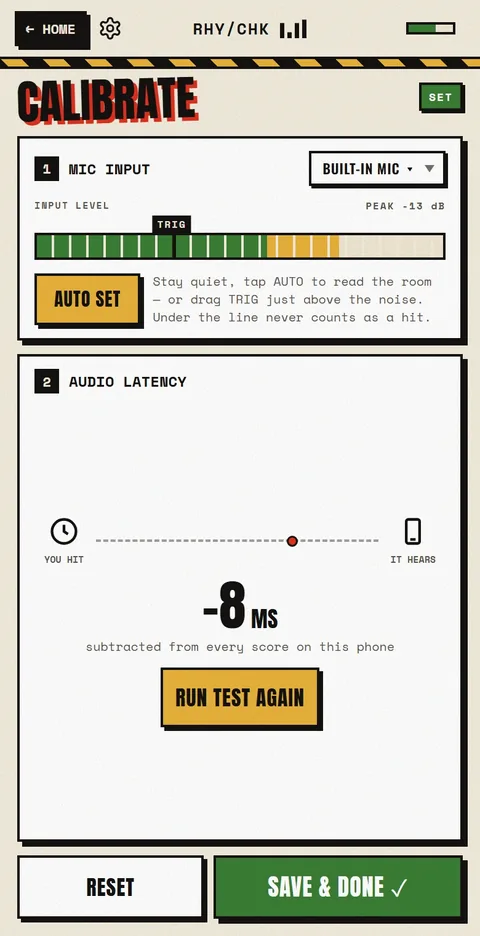
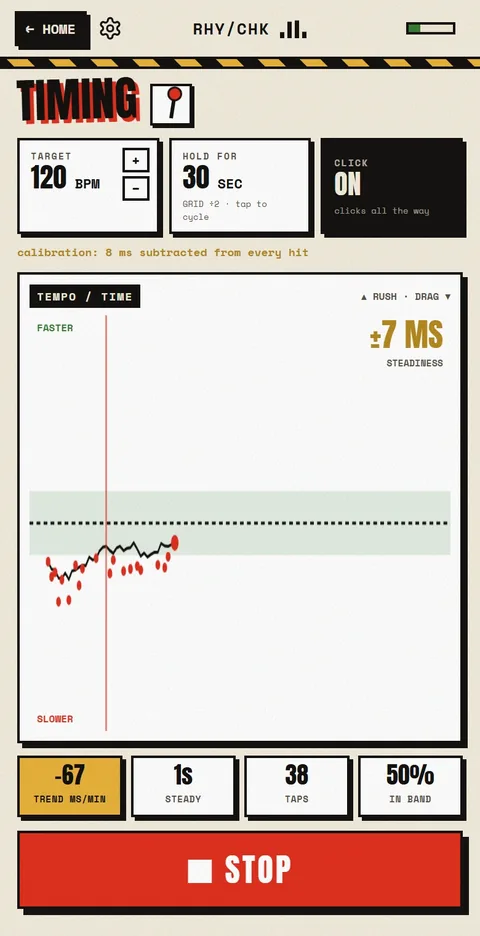
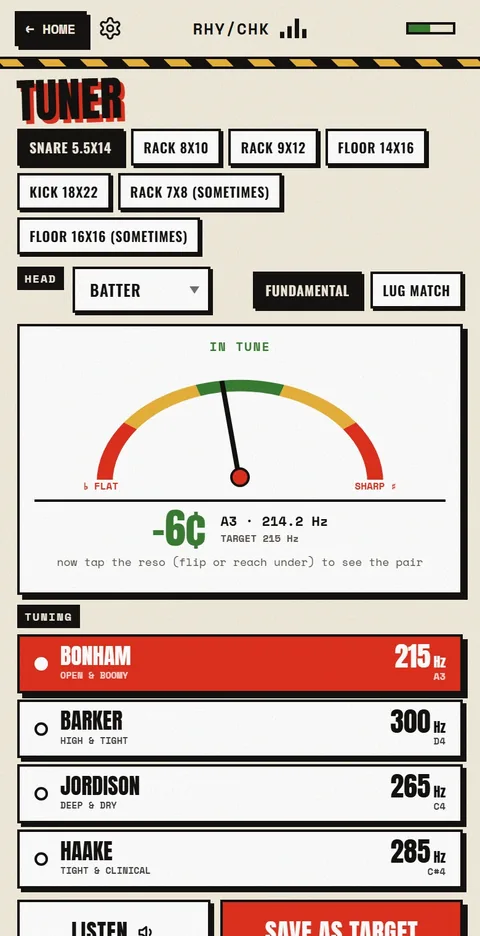
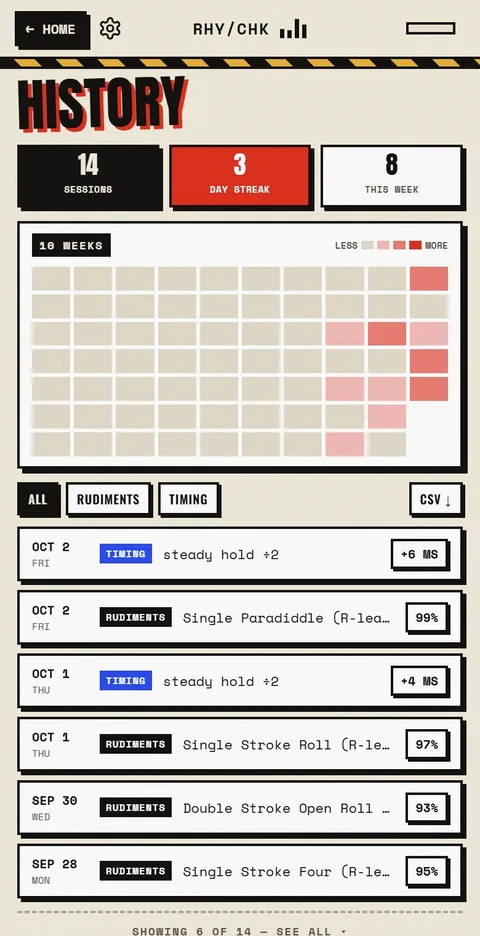
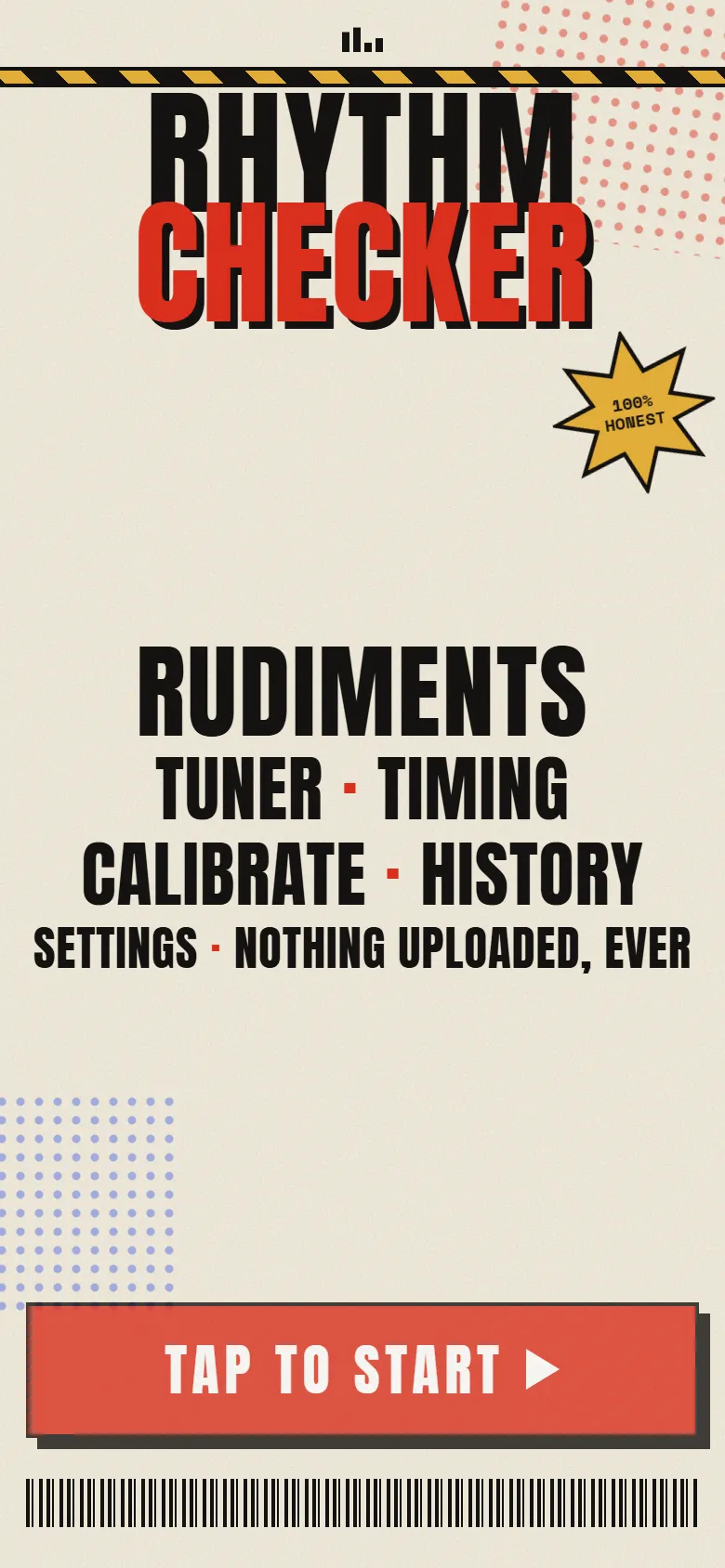
It asks for the microphone only when you start a drill, and everything stays on your device.
Why I built it
Behind the kit, a fill feels locked in. On the recording, it rushed by a hair. I play drums in a band, so I built Rhythm Checker to tell me which one is true.
It deliberately doesn’t judge the groove: sometimes dragging behind the beat is the whole point of a song.
What I decided
- Practice in rudiments, as drummers already do: each one a drill with its own target.
- Do all the signal processing on the device. No cloud, no running cost.
- Calibrate the microphone’s lag once per phone. Otherwise the app would read the lag as your timing, and you’d spend a week fixing a problem you don’t have.
- Keep the deep analysis out of the app. A Python tool digs in afterward: drift over a whole take and history across weeks.
Try it
Open the app on an iPhone in Safari and add it to your home screen. After the first visit it works offline.

