Project
Study Bot
A study planner that runs the session the research says works, which is rarely the one that feels productive.
5study modes
3confidence levels, asked before every answer
In motion
Why I built it
Generic flashcard apps treat every topic, and every student, the same. They don’t know which concepts you’re shaky on, when you’re free, or what your professor spent 20 minutes on last week. I wanted a planner that knew all three.
What I decided
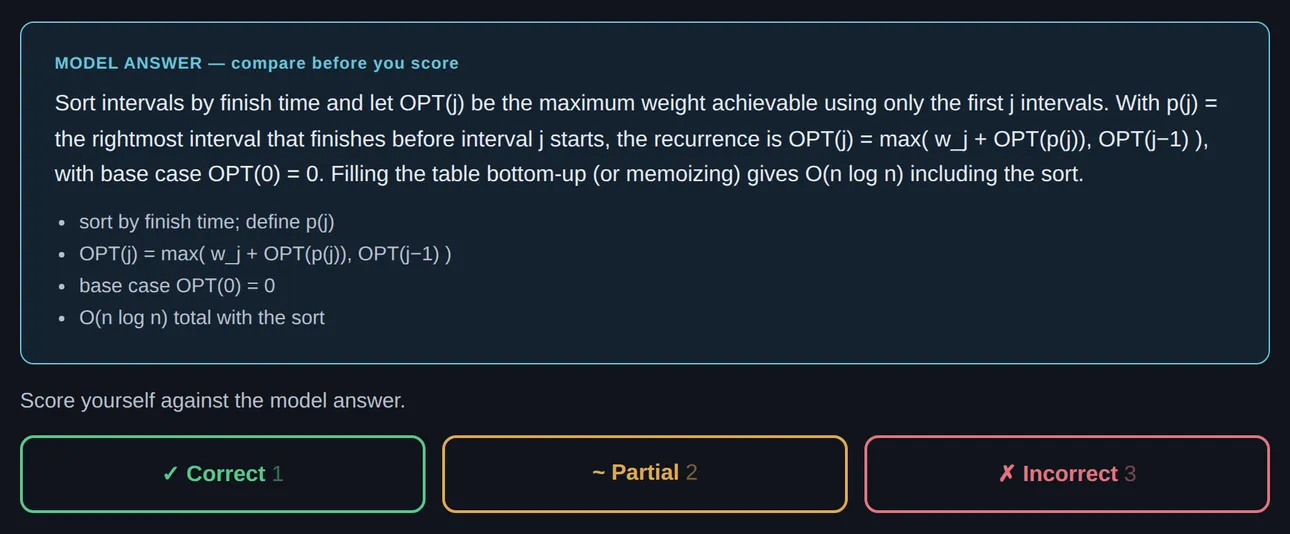
- Five modes, each mapped to the research. Retrieval practice, interleaving, a two-phase exam simulation, error repair and worked examples, with breaks built into the runner rather than left to willpower. Each evidence card cites its paper.
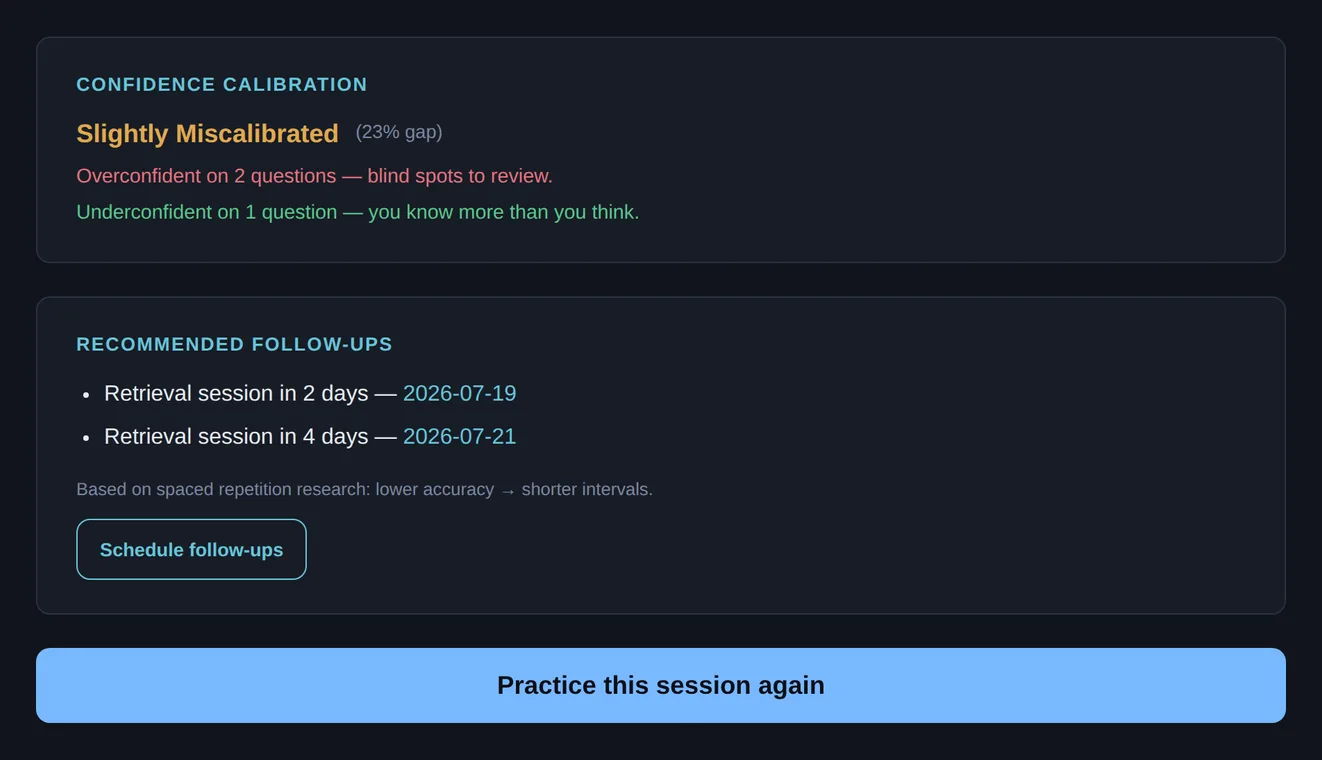
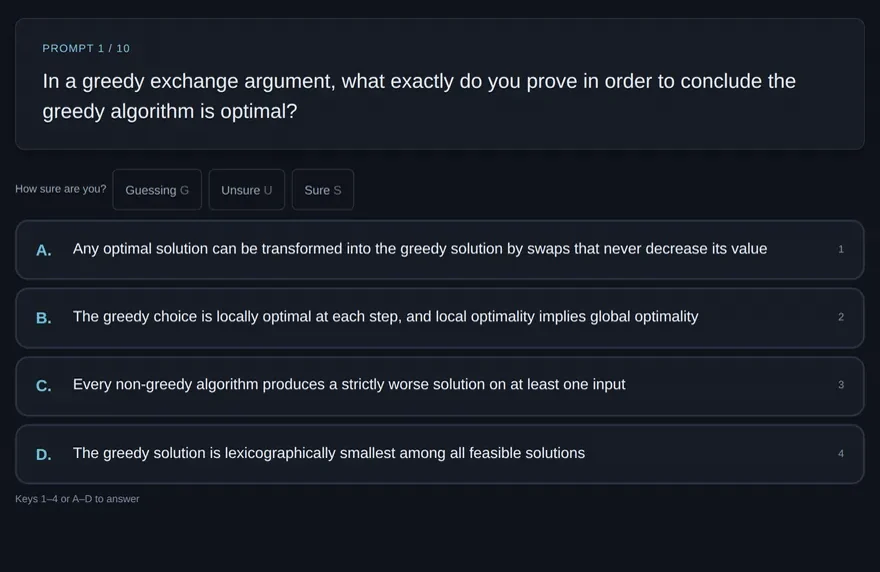
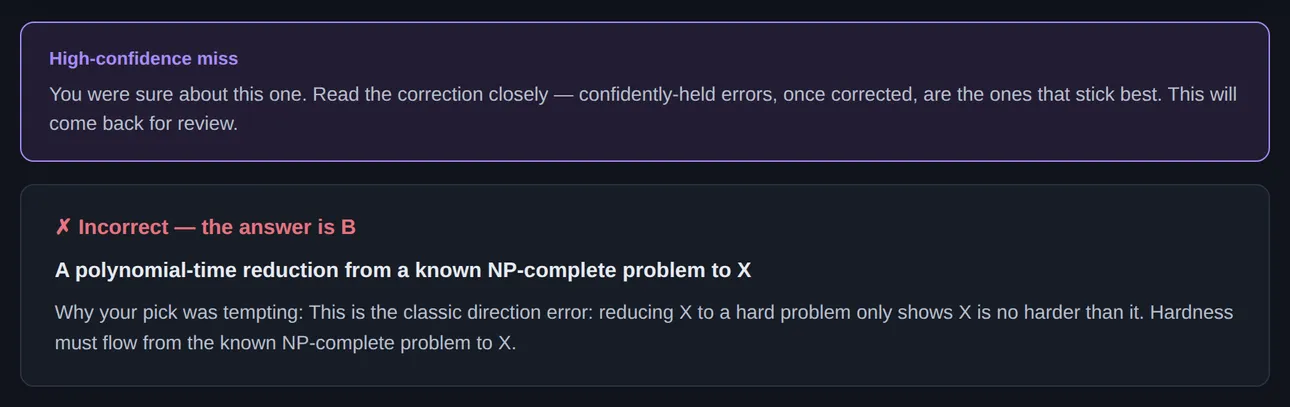
- Confidence first, then the answer. The runner asks whether you’re guessing, unsure or sure, and flags wrong answers you were sure of, because those are the corrections that stick. The end of the session shows where confidence and accuracy parted ways.
- Nothing leaks before you commit. No hint, excerpt or answer reaches the screen until you’ve answered. The server enforces that, and an end-to-end test covers it.
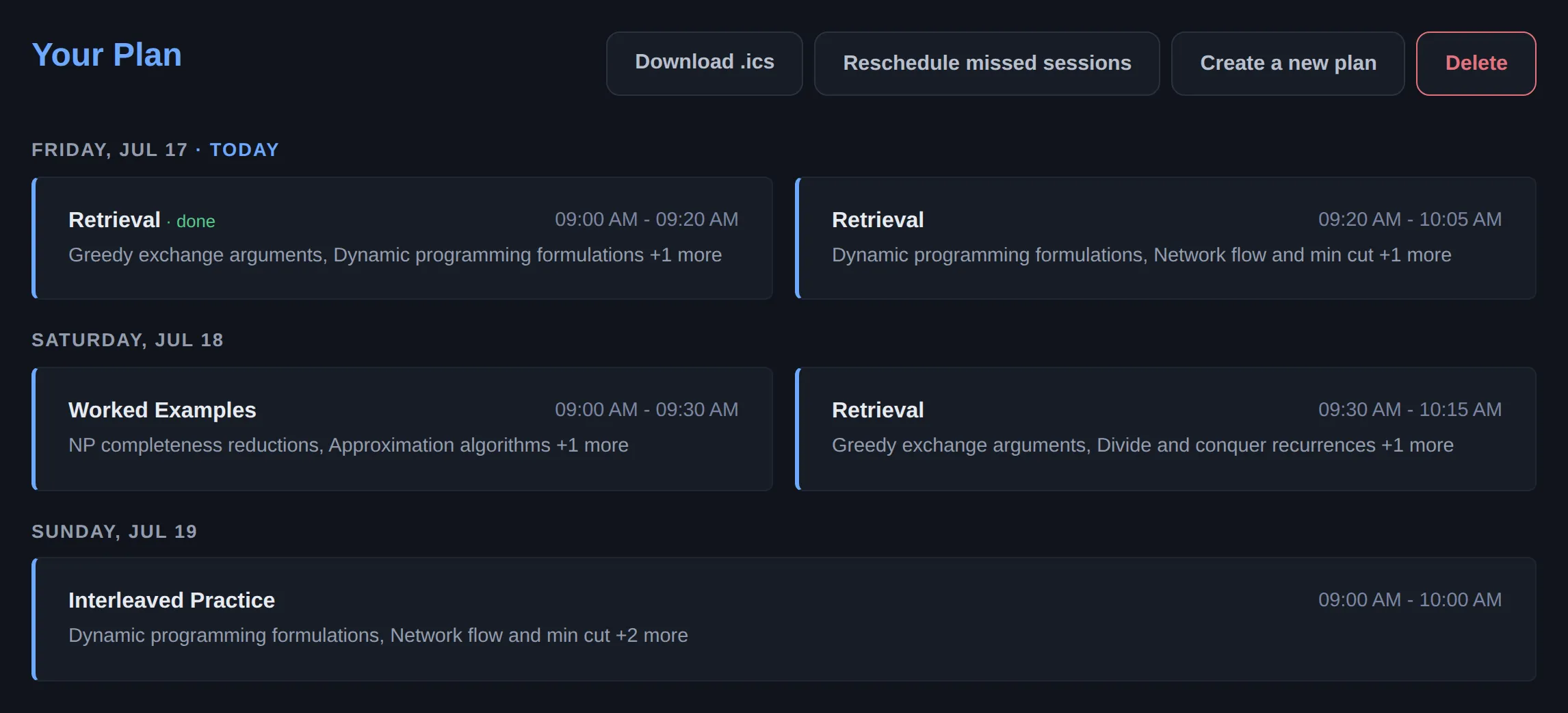
- Plans become appointments. The week’s plan downloads as a calendar file or goes straight to Google Calendar.
Screens
Status
Only the interface needs polish before a public build. The engine, modes, knowledge layer and planner are built and tested, with unit, integration and browser suites.

