
Clean-Data
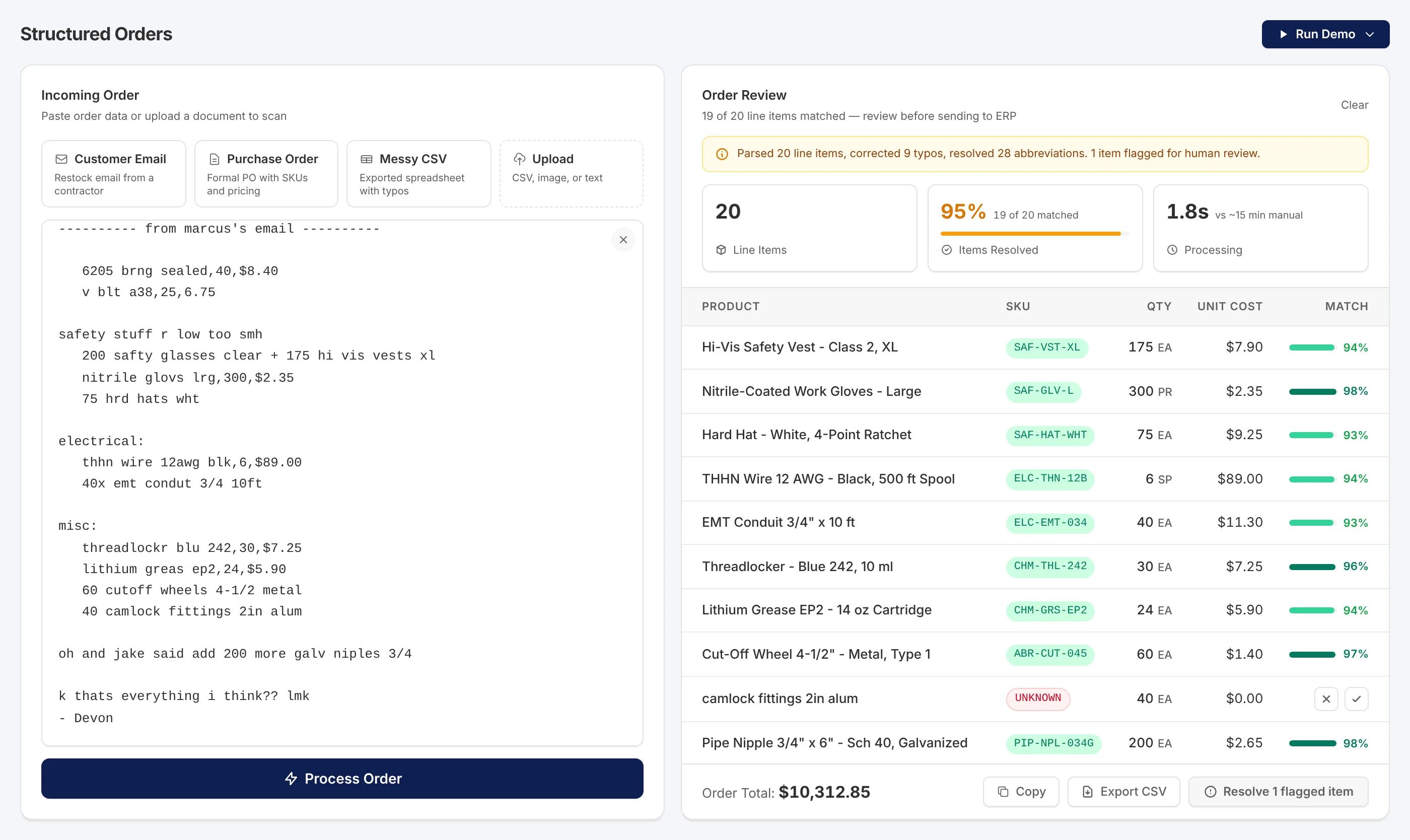
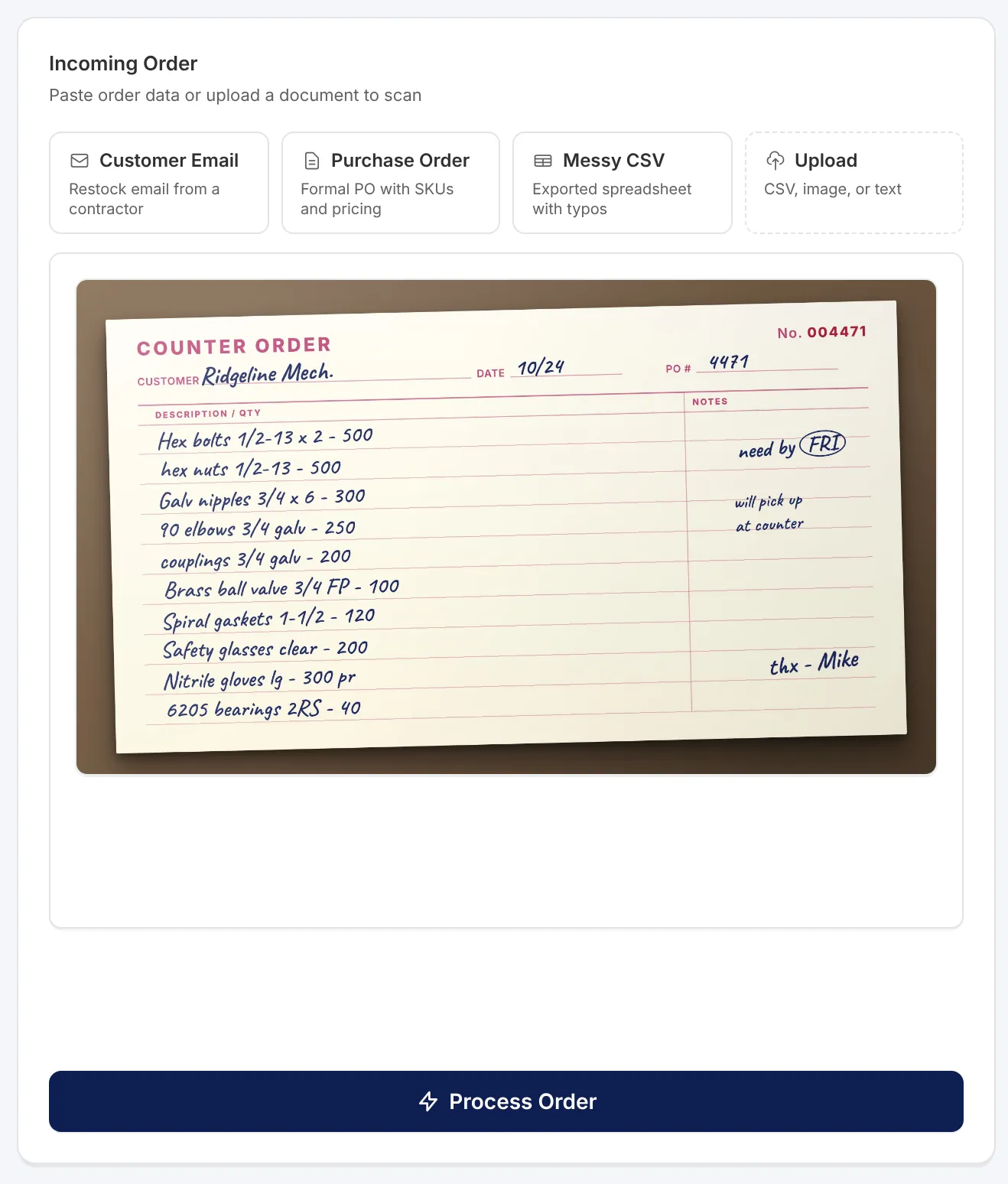
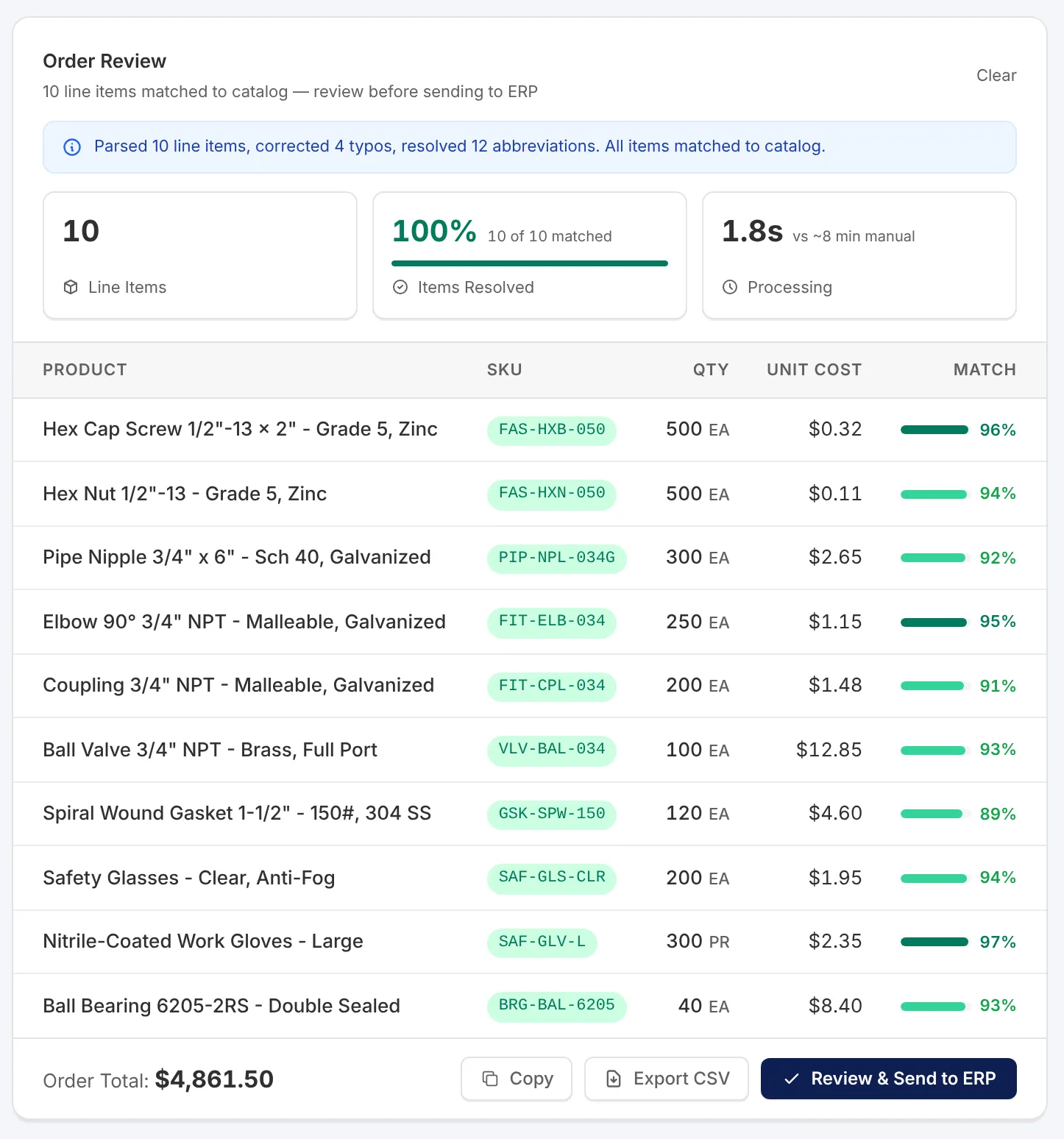
Paste a messy order and get back line items matched to the catalog. Nothing uncertain goes through until a person signs off.
The numbers
Clips
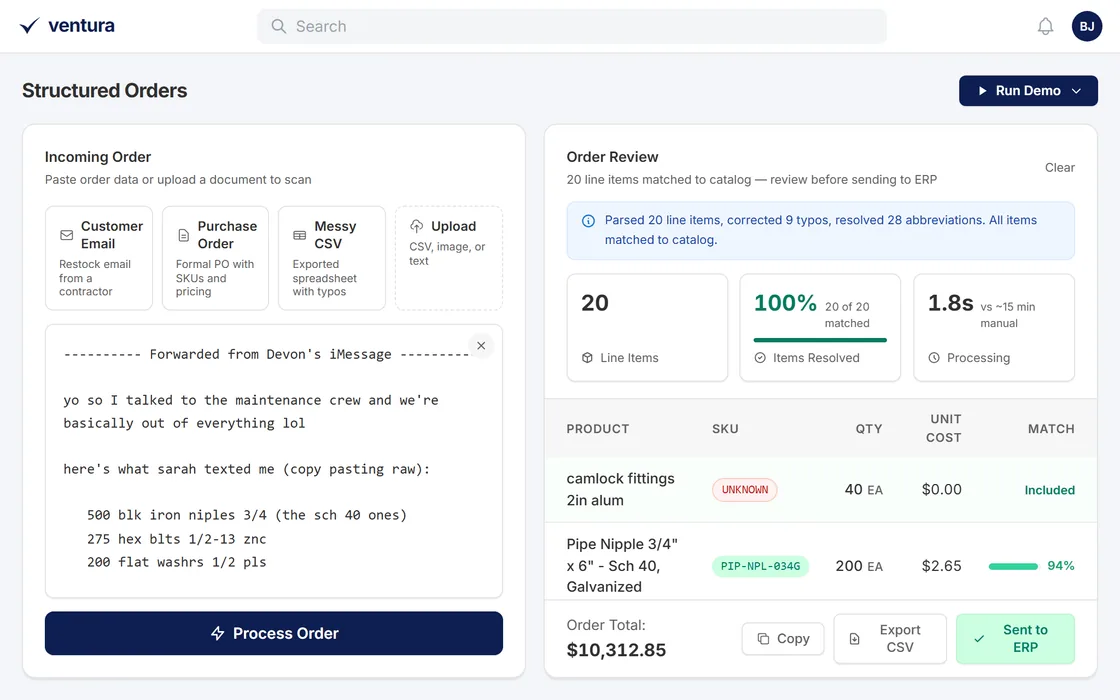
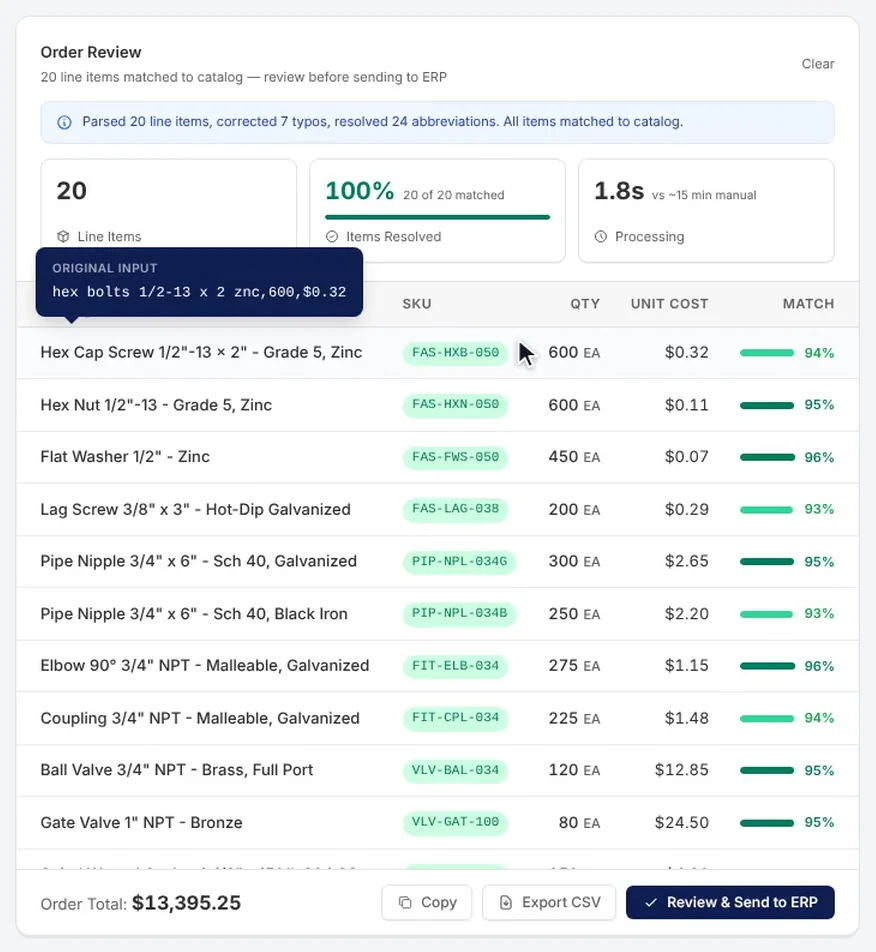
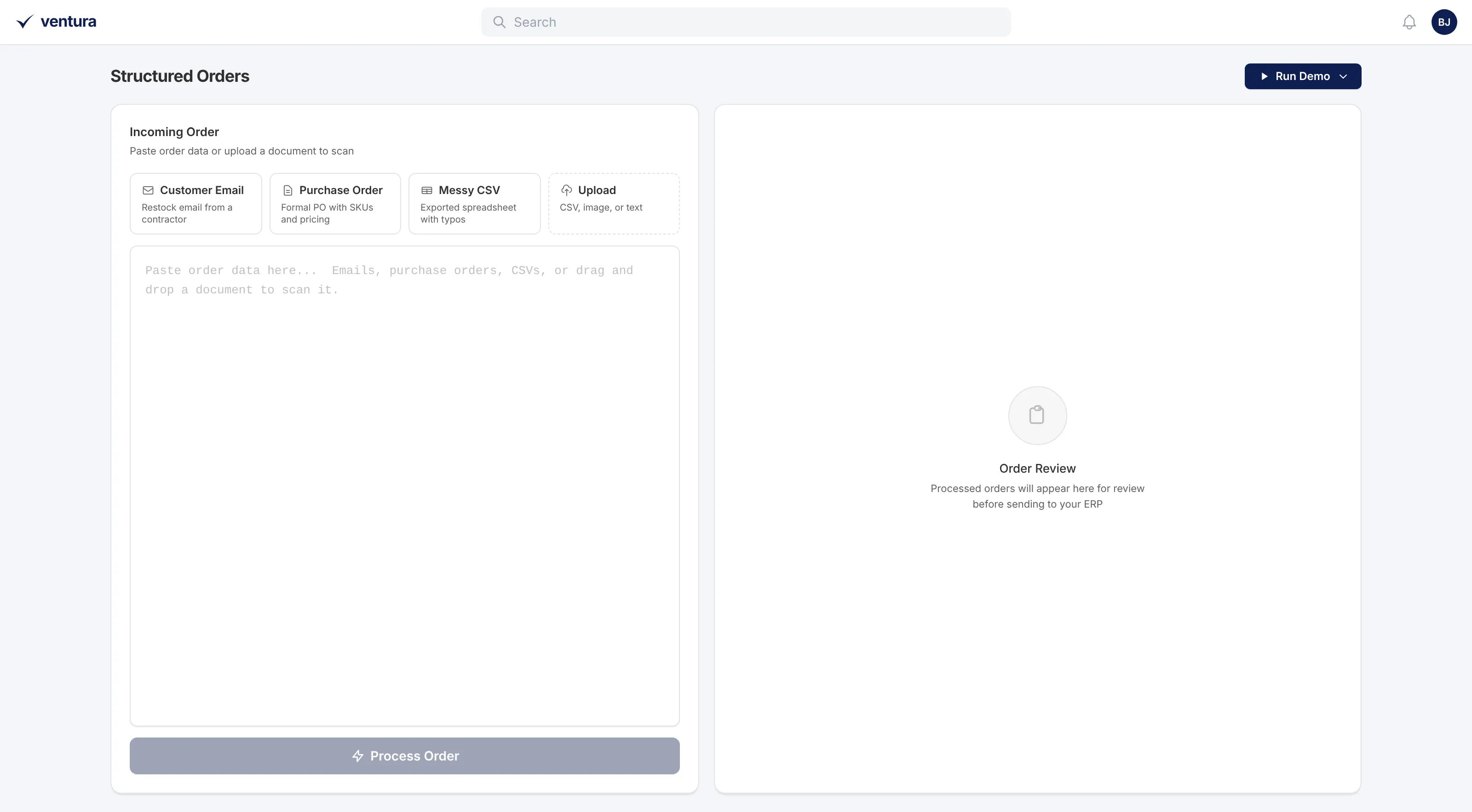
Once it’s open, press Run Demo, then try the Edge Case.
Why I built it
At Ventura, we sold industrial distributors an agent that reads their orders, even an email that says “blk iron niples 3/4”. The product was hard to explain in a sentence but clear after ten seconds of watching it work, so I built a version anyone can run. It still has Ventura’s name in its header.
What I decided
- A person signs off before anything is sent. Anything it can’t place gets flagged, and sending stays locked until someone skips or includes each flagged line. No setting turns that off.
- Every line shows where it came from. Hover over any row to see the exact words it was read from. That’s how a distributor’s rep learns to trust it.
- No setup. A deterministic parser runs the whole demo offline.
How it works
- An order, however it comes inEmail, purchase order, spreadsheet or text message. With an application programming interface (API) key, a photo too.
- One parse endpointThe same route for every input
Is an API key set?
- A hosted modelWith the catalog in its prompt
- A deterministic parserSeven extraction patterns, offline
- A fuzzy catalog matcherMatches by aliases and word overlap
- Line items, matched to the catalogEach with a confidence score
- A person reviews the orderSkips or includes each flagged line
- Sent to the ordering system (ERP)In the demo, only marked approved, or exported as a spreadsheet (CSV)
Read a messy order line
Pick a line from the forwarded text message in my demo’s Edge Case, or type your own, and see how the parser reads it.
How the parser reads it
500 blk iron niples 3/4 (the sch 40 ones)
The demo reads this as 500 of Pipe Nipple 3/4" x 6" - Sch 40, Black Iron, part number PIP-NPL-034B. Reading other lines takes JavaScript.
This is my demo’s no-key mode, ported to run in your browser with its made-up catalog of 23 parts. The demo reads a whole message at once, and it picks each match percentage at random within a range. Here a line always gets the same number from that range. The notes over the words are mine.

